Author Archives: Sarah Marley

The Importance of Attending Conferences

In December 2013, the Society for Marine Mammalogy will be holding its biennial conference on the biology of marine mammals in Dunedin, New Zealand.  Last Friday, I was notified that I am lucky enough to be presenting at the conference!  But why are conferences such a big deal?

What is the SMM conference?

The Society for Marine Mammalogy (SMM) biennial conference is a gathering of marine mammal scientists from around the world, with the goal of enhancing collaboration, sharing ideas, and improving the quality of research on marine mammals.  Every SMM conference has a fantastic turnout, with hundreds of scientists in attendance.  This year promises to be no different, with over 1000 abstracts for talks and posters being submitted.  Unfortunately, about 20% of these were rejected.  But 200 talks and 400 posters have been accepted for the event.

What will I be presenting?

Pygmy blue whale and vessel; Geographe Bay, Western Australia

Pygmy blue whale and vessel (Geographe Bay, Western Australia) – how close is too close?

I will be presenting a poster based on work by myself and colleagues at the Southwest Whale Ecology Study (SouWEST).  Check out my Projects page for more information on this group.  The poster will document the responses of pygmy blue whales to vessel traffic during their migration through Geographe Bay, Western Australia.  Understanding the impacts of anthropogenic activities on marine fauna has become of increasing concern as the human population continues to expand its activities in the marine environment.  The SMM conference will be an excellent opportunity to share our research findings with the scientific community.

What’s the point of conferences?

Of course, conferences aren’t just a way of spreading the word about your own work – they’re also a great chance to hear about developments in your field and keep up-to-date with recent research.  The best part is that if you have questions or would like to know more about any particular topic, the researchers are right there to ask!  Conferences are great networking opportunities, whether you’re a student looking for a job, a professor looking for students, or a researcher interested in finding collaborators for a particular project.  Since presentations are often discussing work at varying stages (from preliminary findings through to recently published), it is also a good chance to get some informal peer-feedback.  Plus, you often get to travel to pretty cool places!

But for me the best thing about academic conferences is this:  inspiration.  Being surrounded by passionate people, new ideas, recent discoveries…  It all acts as a massive source of motivation and encouragement to continue in what can sometimes be a difficult field.  Everyone needs a pick-me-up sometimes, and I find the buzz of conferences invigorating.

So bring on New Zealand!
Dolphin Watch: Community Science in Action

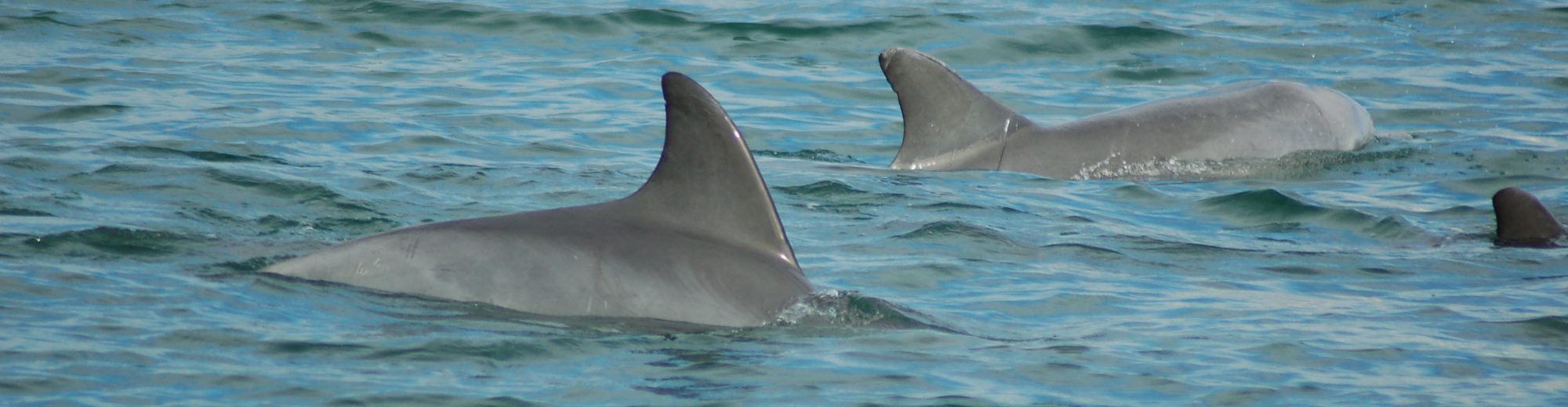
How can a small team of scientists hope to measure a community of bottlenose dolphins – highly mobile animals – inhabiting a river stretching 60km through the capital of Western Australia?  By creating a network of citizen scientists!

The Swan-Canning Riverpark is an estuarine protected area flowing through Perth, WA.  Despite being situated in a major metropolitan area (over 1.4 million people), the river is home to a resident community of approximately 20 Indo-Pacific bottlenose dolphins.  Murdoch and Curtin Universities are leading the research into Perth’s Swan River dolphins, investigating how environmental changes in the river and human activities can affect the dolphin community.  For more information on the latest paper from this project, please click here.

Dolphin Watching for Science

Click here to view the Dolphin Watch Annual Report 2012-13

Click here to view the Dolphin Watch Annual Report 2012-13

The Dolphin Watch project is a partnership between the Swan River Trust’s River Guardians program, and Murdoch and Curtin Universities.  It was instigated in April 2009 to learn more about the bottlenose dolphins residing in the Swan and Canning Rivers by training members of the local community to monitor the dolphins.

On Friday evening I had the pleasure of attending Dolphin Watch Day 2013.  Each year, the amazing  contribution of the Dolphin Watch volunteers are celebrated on Dolphin Watch Day, providing an opportunity to share the most recent discoveries and research news.  Since the project began in 2009, volunteers have contributed 7,180 records of dolphin sightings detailing the location, group size and behaviour of animals seen in the river.  This has helped develop scientists’ understanding of how the dolphins are using this area, and will support the conservation of these much-loved locals.

Benefits for scientists…

Marine mammals are difficult to spot at the best of times.  But trying to track them down in a long river system, full of bays and inlets, can be a time-consuming process.  However, each year thousands of people use the Swan River for sport, recreation and travel.  If those people are already out on the river, it makes sense to make use of local knowledge to discover more about the ecosystem and its inhabitants.  Dolphin Watch essentially gives the scientists ‘eyes’ along the whole length of the river.

The growing size of this data set will allow scientists to begin studying long-term trends in dolphin habitat use and behaviour.  It will also improve their ability to detect changes in population size and behaviour which may effect the conservation of these iconic animals.  Citizen science projects such as this help us to develop our understanding of the world around us, and directly contribute to important research and conservation efforts.

… as well as volunteers!

This ever increasing amount of date is due to the growing size of Dolphin Watch, as well as the ongoing efforts of established members.  With almost 600 members of the Perth community out voluntarily monitoring the river, it is extremely heartening to see so many people taking an interest in preserving the local environment and it’s fauna.

But it’s more than just spotting the occasional dolphin.  People go out of their way to attend training sessions, fill in sighting reports, and spend hours scanning the water.  Already this year, they have submitted over 600 sightings so far – that’s a total of 2,467 hours dolphin watching!  A phenomenal effort!

And this is because people care.  They take an interest in the world around them, and want to know the outcomes of the research they’re helping to conduct.  They enjoy spending time in the natural environment, and want to ensure that future generations have the same opportunity.  They are an inspiration – and I hope their numbers continue to swell, bringing benefits to not only the dolphin community but our own community as well.

More Info?

The Dolphin Watch Annual Report (2012-13) became available on 14th June 2013.  For more information about the work of this exemplary citizen science program, have a flick through the report here!

The Virtual Scientist

In a survey from 2011, only 4% of Americans could name a living scientist.

Can you identify these scientists?

Can you identify these scientists?

Many people may be unable to name a living scientist.  But they certainly know where to go to find out more:  the internet.

With the words “just Google it” becoming an everyday phrase, the internet is now a place to find answers to all life’s little questions.  What was the footie score?  Where shall we go for dinner?  Which car should I buy?  It is a platform being rapidly utilised by retailers and advertising companies.  But it is also fulfilling an educational capacity, with material ranging from pre-school to post-doctoral level now widely available.

Interphobia

(yes it’s a real term – just Google it!)

Over the past couple of months, I have attended several talks encouraging scientists to fully utilise the online world.  The idea of creating an ‘online presence’ is a hot topic just now, yet many scientists and researchers are reluctant to participate.

The internet can be a scary place.  It is full of viruses, hackers, trolls and a whole range of people out to steal your money / identity / intellectual property.  It can also be ruthlessly subjected to ‘word of mouth’, with information being rapidly passed from one person to the next.  With the possibility of becoming the misquoted scientist, this can be terrifying for many researchers.

But the internet also offers substantial rewards.

Although environmental science is now being widely discussed in schools, most people over the age of 35 were never formally taught about climate change.  Rather, they have had to obtain their information from publically-accessible sources, such as newspapers, magazines, and social media.  The latter in particular is a rapidly increasing information source.  In fact, it offers the perfect opportunity to turn ‘word of mouth’ from a curse to a blessing!

How many of you check Facebook in the morning?  Have a quick look at Twitter on your break?  Perhaps you’re even one of the many who check social media before you even get out of bed?  If so many people are using social media, then why not scientists?!  The internet offers a much wider audience than previously available through academic publications, press releases or public seminars alone.

Why scientists should get online

Jo Hawkins, a digital marketing specialist, has written an excellent article giving 8 reasons why academics should invest in their online reputation.  In a nutshell, the use of online platforms are an excellent two-way street linking scientists and non-scientists.  Researchers have the opportunity to engage with the general public, contribute to education, and spread word of their research to a wide audience.  But in return, the general public get the chance to see ‘the person behind the labcoat’, easily find an accessible authority to question on topics of interest, and learn about lots of interesting projects happening around the world.  Win-win!

Science is all around us.  This week, try adding an extra dollop of it to your daily life and find at least one scientist to follow online.  Who knows what you may discover!