Tag Archives: PhD

Can you be happy for 100 days in a row?

What made you happy today?

Perhaps you enjoyed a conversation with a friend, or had a really good work-out, or treated yourself to a cheeky tea and cake combo this avro!

Or maybe you are sitting there thinking back through your day and nothing springs to mind…  In which case, this could be the challenge you didn’t even know you were waiting for!

#100happydays
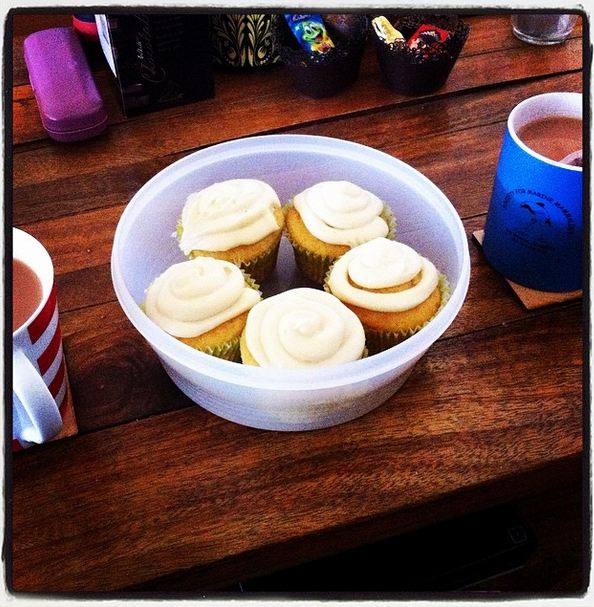
Did you find happiness in some yummy afternoon tea...

Did you find happiness in some yummy afternoon tea…

The first step to long-term happiness is finding small everyday things to be happy about.  Once you start to become more aware of the little things, they will soon add up!

The idea behind the #100happydays challenge is to take one picture each day of something that made you happy.  You can choose to post it on Facebook / Twitter / Instagram with the #100happydays hashtag, or email it into the foundation to avoid publicity, or even just keep it to yourself.  The hope is that by creating this daily ritual of stopping to share your happy moments, you will start becoming more mindful of the existence of such moments thus training yourself into the good habit of appreciating life.

Slipping into Neutral…
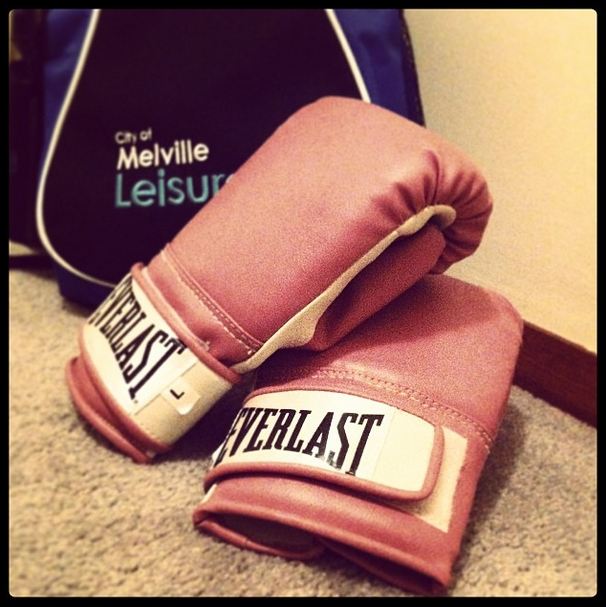
... or a really good workout ...

… or a really good workout …

Whenever I ask someone how their day is going, the general response is a half-shrug and an “alright”.  With our increasingly busy lives, hectic schedules, and constant rushing between activities it can be all too easy to slip into a groove.  Wake up, go to work, come home, have dinner, go to bed.  Same old, same old.

But is every day really the same?  Do you just go through the familiar motions without even a moment of happiness?  Or can you think of at least one moment today when you have a genuine smile?

If these questions are causing you any sense of doubt, perhaps it’s time to consider this challenge…

“But I don’t have time for this”

Just stop and think about this statement for a second:  you don’t have time to be happy?  Seriously?

... or maybe a care package from home?

… or maybe a care package from home?

I am pretty bad for schedule over-loading.  Between general PhD-ness, fieldwork, teaching, and general existence I find it pretty hard sometimes to keep on top of things (see an older post on the over-whale-ming side of PhD life).  Unfortunately, the first thing to suffer are the people around me, and before I know it the phrase “Sorry” is being text around several times a week along with time-related excuses.  And that is just for the locals – for my long-distance friends and family, it’s even harder as emails go weeks without a response.

This has been on my mind a lot, as my friend Janelle is submitting her PhD thesis today, and moving away from Perth next week.  We’re both aware that it’s going to become even harder to stay in touch over the coming months.  Janelle was one of the first friends I made in Australia, and I am really going to miss having her within convenient tea-and-whinging distance.  So when she suggested using the #100happydays idea as a way of keeping in touch, I was up for the challenge!

So how am I going?

See for yourself!  All my photos are available to see on my Instagram site.  I’m now up to day 20, a fifth of the way in, and even the Sceptical Scot in me can see it’s yielding results.  I’m really enjoying seeing what Janelle is up to, and having a smile over whatever has made her day!  Even though we’re in the same city, being in different universities makes day-to-day contact difficult.  But this means at least we can share the same emotion over the same event each day!

Even better, other friends are cashing in on the deal.  Over the last couple of weeks I’ve had several messages from people (both local regulars and far-away pals) saying how much they’ve enjoyed getting these snapshot glimpses into my life.  So I’m happy, Janelle’s happy, and our happiness is making other people happy.  Win!

… So I’ll ask you again.  What made YOU happy today? 🙂

Listening to the Sound of Success!

Two different projects came to fruition last week, neatly coming in time for my birthday!  Not so sure about the ageing part, but it was definitely good timing on the research outcomes!

From listening for dolphins…

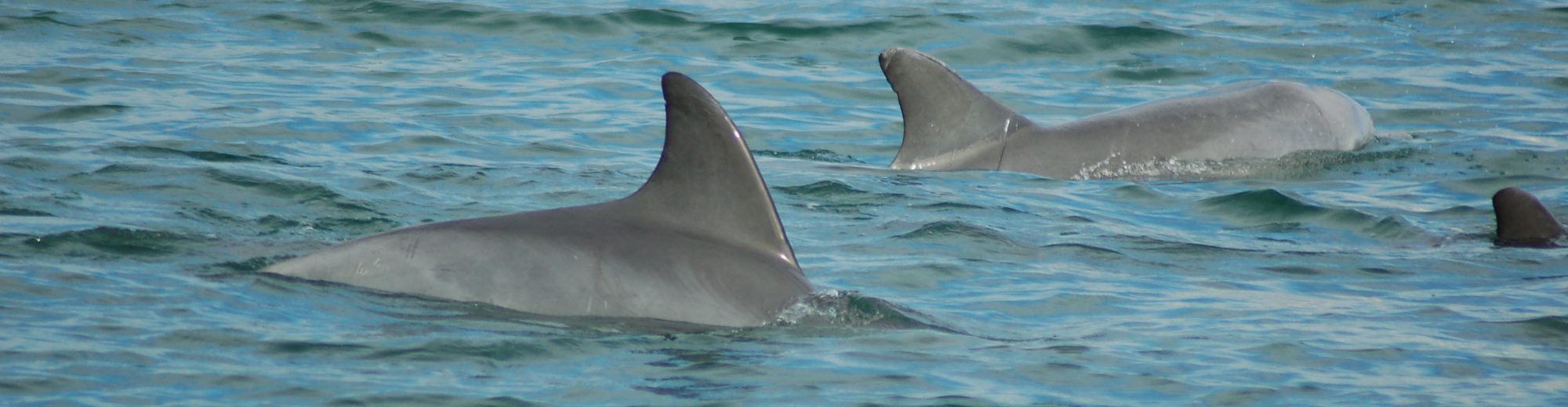
Earlier this month I spent a morning out on the river with the ‘Destination WA‘ TV crew, filming a short segment about the Swan River dolphins.  We spent a lovely few hours out on the Swan River Trust boat Kwilana (Noongar for ‘dolphin’) whilst the team did interviews with myself, Delphine Chabanne (Murdoch University), Marnie Giroud (SRT), and Jennie Hunt (Dolphin Watch).

It was really interesting to see ‘behind the scenes’ for the filming process, especially given the great camaraderie of the TV crew!

… to interpreting blue whales!

Non-song vocalisations of pygmy blue whalesAnother project success last week was finding out that our paper “Non-song vocalizations of pygmy blue whales in Geographe Bay, Western Australia ” had been published online by the Journal of the Acoustical Society of America!  This study used simultaneous land-based visual observations and underwater acoustic recordings to examine the communication of pygmy blue whales.

These animals are famed for their songs, made up of repeated patterns of notes.  But in this study, we focused on the non-song sounds produced by pygmy blue whales and found six different vocalisations – five of which had never been described for this population before!  Hopefully this will help inform passive-acoustic monitoring for the species.

And as for ‘Older and Wiser’?

Well, that remains to be seen!  But entering 28 as a PhD Student, TV Star, and three-times Published Scientific Author isn’t a bad way to start 😉

Over-whale-ming: Life as a PhD Double-Agent

For the last ten weeks, I have been living two lives.

Life 1: Sarah Marley, field biologist. Commences dolphin surveillance at 0500 hours, ceases observations at 1830 hours. Spends spare time managing an ever-increasing network of volunteer dolphin spies (aka “dolphineers”) to conduct regular river monitoring at select top-secret sites. She moves as a shadow, elusive of social situations, needless of sleep, as she begins the task of data hoarding…

Life 2: Sarah Marley, regular PhD student. Comes into the office a few days a week, and spends time reading papers, learning Matlab, teaching undergrads, and tackling a never-ending flow of emails. Existing mostly on caffeine and to-do lists, she has a desk-drawer full of snacks and several types of tea. Collects dolphin-themed desk decor.

Neither sound too strenuous. But recently, co-existence of these roles has become slightly tricky…

Sometimes study can be a bit over-whale-ming...

Sometimes study can be a bit over-whale-ming…

Life 1 is highly volunteer-dependent. My fieldwork needs at least a team of three (including myself), so my schedule varies each week depending on volunteer availability. I have an amazing team of dedicated, lovely, wonderful volunteers.  But – as I am trying to get out to each site 3 times per week – I inevitably have to spend a few hours trying to sign folk up to fill gaps. I live in constant fear of cancellations, and check my phone compulsively “just in case”.

Life 2 flows around the first; if I’m not in the field, I head to uni. But snatching office hours here and there can make it difficult to focus on larger tasks. As a result, when I make my weekly to-do list each Monday, I find myself re-writing the same few big jobs, along with a wave of new mini-tasks.

To try and combat this, I attended a time-management workshop last Friday. Which I was late for. But as a friend pointed out, I hadn’t attended the workshop yet so that was to be expected!  The presenter quizzed us on our degree courses, study habits, and sleep patterns. She assured me that “you only need four hours sleep to survive, so you’ll finish your PhD in no time“.  Funnily enough, this was not actually very reassuring.

Despite this we did pick up a few useful hints.  This week I have drafted up a timetable of activities based on how long each task takes.  Hopefully this will help me to use my time a bit more efficiently.  My New Years Resolution of getting a minimum of 7hrs sleep was becoming sadly neglected, so I’m also trying to “shut off” when I come home to make sure I’m rested enough to blast through those to-do lists the following morning! The ability to say “no” is something I’m working on improving.

I think the biggest challenge is accepting that there is only a given amount of things I can accomplish during the fieldwork phase.  This should only last a few more months, then there will be a seasonal down period, giving me plenty of time to tackle the desk-based stuff.

But I guess no one ever said being a Science Ninja was easy 😉

Fieldwork Update: Watch out dolphins, Big Sister is watching (and listening!)

Over the last couple of months I have had a busy whirlwind of deploying noise loggers; learning how to program recording schedules and then process acoustic data; complete health and safety forms; obtain permits for area use; train volunteers for visual surveys; organise fieldwork shifts…  and this is before the fieldwork has even started!  But now it’s all underway and the data is coming in!

Eavesdropping on Dolphins…

Sylvia and Mal from CMST head out into the Swan River to help deploy my first batch of noise loggers

Sylvia and Mal (CMST) head out into the Swan River to help deploy loggers

Back in November 2013, three noise loggers were deployed in the Swan River as part of my PhD project examining the acoustical and behavioural response of coastal dolphins to noisy environments.   I have been lucky enough to have great support from the students and staff at CMST to help me with deployments.  Now the first batch of acoustic data from this first logger deployment is in my office, ready for processing!

These noise loggers record underwater sound produced by ambient (wind, waves), biological (dolphins, fish, crustaceans), and human sources (vessels, traffic, and construction).  For more info on these noise loggers, see my previous post on recording whale sounds in Albany.  Whilst I am examining this first acoustic data batch, the noise loggers have been moved to new locations and are busy recording more underwater sounds.

Over the next year, I will be deploying noise loggers at several spots throughout the river.  I can then use these data to describe the underwater soundscape of the Swan River and examine the vocal behaviour of bottlenose dolphins.

…  Whilst Watching from Above!

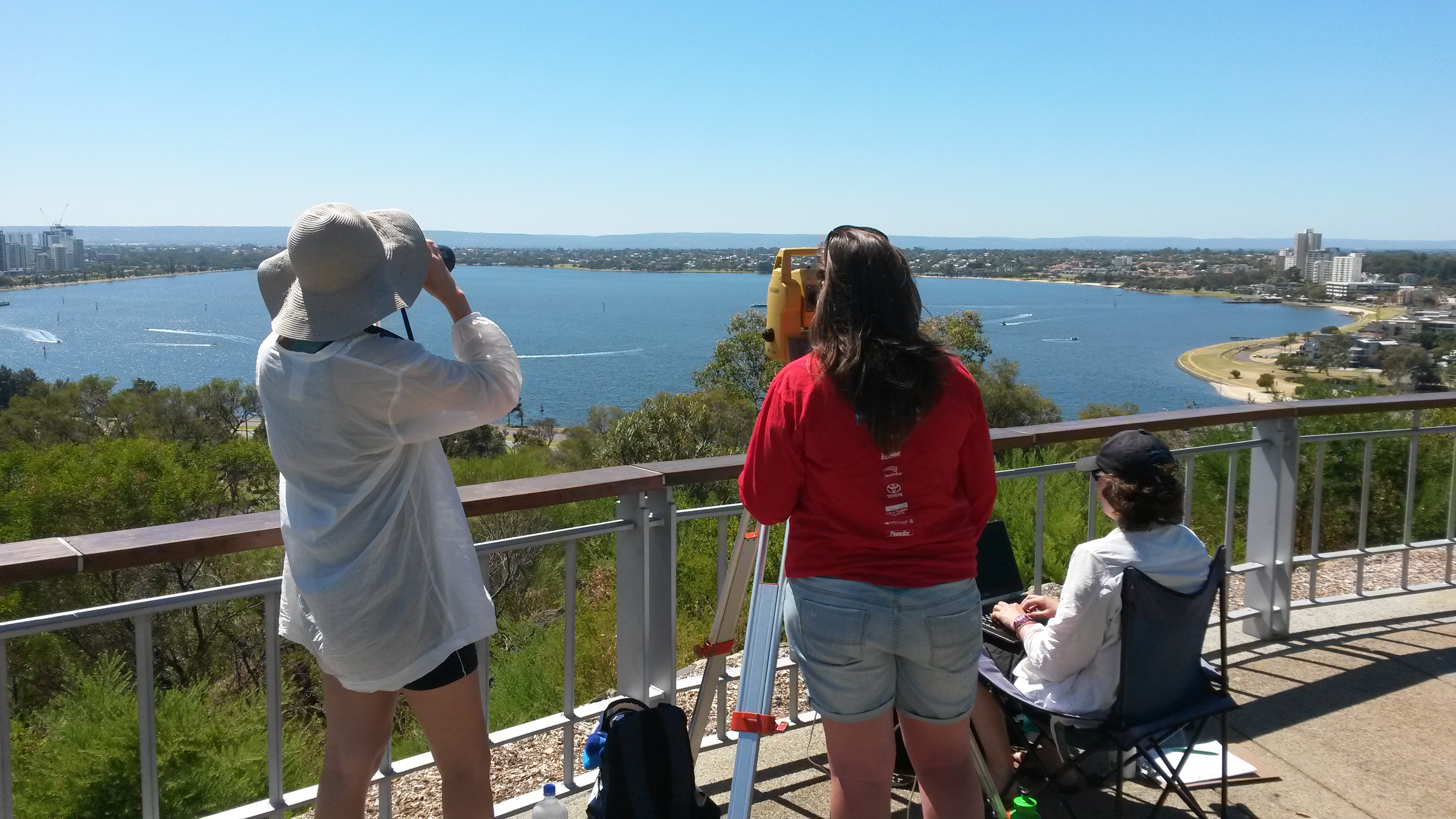
Visual observations of dolphin behaviour began in January 2014.  I am conducting visual surveys at various vantage points along the shoreline, using a theodolite to record dolphin movements and behaviours in the river.  This visual information can then be used to understand the context of dolphin sounds and their use of the underwater acoustic environment.

A theodolite is traditionally a surveying instrument, used to create 3D models of the landscape.  It does this by selecting different points, then measuring the horizontal and vertical angles to give an exact bearing and distance to each point; this creates a scale map of the area.  But we can also use this technique to get the position of objects out at sea – such as dolphins!  So we can use a theodolite to map a dolphin’s position each time it surfaces, giving a very fine-scale track of how the animals are using an area.  The added bonus being that the dolphins are not aware of our presence, so we do not have to worry about disturbing the animals and influencing their behaviour.  Although I do often wonder if they have a “feeling of being watched”…

Volunteers Elly and Bec join me surveying for dolphins in the Swan River

Volunteers Elly and Bec join me (and theo) surveying for dolphins in the Swan River

To run these visual surveys, I require a theodolite team:  one person entering data on the computer, one collecting positions using the theodolite, and some others to find the dolphins!  Thankfully, I have had an overwhelming amount of support from my ex-students (and some marine biologist friends), and currently have around 25 volunteers donating their time to help out in the field.  Many are studying or working full-time, making their contributions all the more amazing and appreciated!

But we have had some particularly awesome dolphin sightings to make it all worthwhile – and even on quiet days, the great team spirit (and masses of life stories to tell) keeps us pretty entertained!

Pursuing a Higher Degree: Why I’m so happy to be starting a PhD!

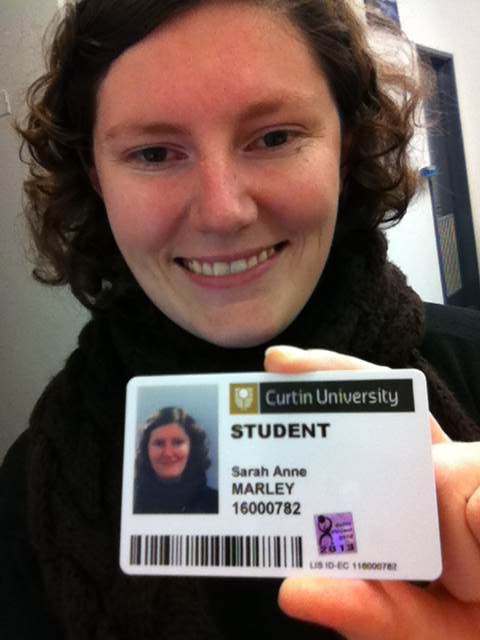
Last week I officially enrolled as a PhD student at Curtin University!  Here I will spend the next three years studying the response of dolphins to underwater noise.

For the last two years, I have been applying for PhD scholarships.  At the same time, to try and continue boosting my CV, I volunteered on various marine mammal projects.  This meant a lot of late nights, working weekends, unpaid leave from work, neglecting my boyfriend and basically quite a bit of juggling.  There were times when I felt overwhelmed and wondered if all this effort was ever going to lead anywhere.  But there were also a lot of fun times, filled with interesting discoveries, new friends, and happiness at pursuing something I loved.

Hope the buzz lasts three years!

Hope the buzz lasts three years!

The day I signed the last piece of paperwork I spent the next 24hrs bouncing around, occassionally squeeling to myself with pure happiness (yes, really!).  Now, a week later, the excitement has become a bit more manageable but I still get a buzz every time I look at my student card.  I’ve chosen a desk in the Higher Degree by Research student building.  I’m changing my email signature.  I’m keeping a colour-coded PhD notebook full of lists, thoughts and notes (much to the amusement of my more cynical colleagues, who frequently ask how long that is going to last).

So why is this such a big deal to me?  What’s so great about a PhD?  Here are the top three reasons why I decided to pursue a PhD:

1.  Curiosity

When I worked in science communication, we used to introduce science to kids by saying “Have you ever asked a question?  Wanted to know why, what or how?  Then you’re a scientist!”.  A bit basic, but fundamentally true – much of science is driven by pure curiosity and the desire to learn.  A PhD is an excellent opportunity to explore several avenues of curiosity about a specific topic, at a depth and intensity that will eventually satisfy almost everyone (probably overly so).

2.  A Love of Research

My childhood dolphin-spotting point in Banff, Scotland (click here for live webcam!)

My childhood dolphin-spotting point in Banff, Scotland (click here for live webcam!)

As a kid I used to spend my school holidays watching the dolphins in Banff Harbour (Scotland), recording sighting times, group compositions and animal behaviour.  Although I didn’t realise it, this was the start of my research career.  Since leaving full-time education, I’ve tried a range of jobs:  sales assistant, bosun on a tourism boat, tutoring, supermarket check-outs, university lecturer, setting myself on fire in the name of science communication…  But any length of time away from research is painful.  I miss learning new things, the craziness of fieldwork, the excitement of getting results.  Research just fits me.

3.  The Challenge

The other thing I miss is being challenged.  Although it’s more than likely that I’m going to regret this statement at some point over the next three years.  But the truth is, it’s only by pushing ourselves and going beyond the comfort zone that we develop.  That’s certainly what I expect a PhD to do!

But of course, this is just my opinion.  Did you have other motivations for pursuing a PhD?  Or perhaps decide against it?  Let me know!  I know that this is the honeymoon period and the real work is yet to come, but for now I’m just enjoying the moment.  At least when I hit the (inevitable) hard patches, I’ll have this list to check back on!  After all, nothing worth having ever comes easy.